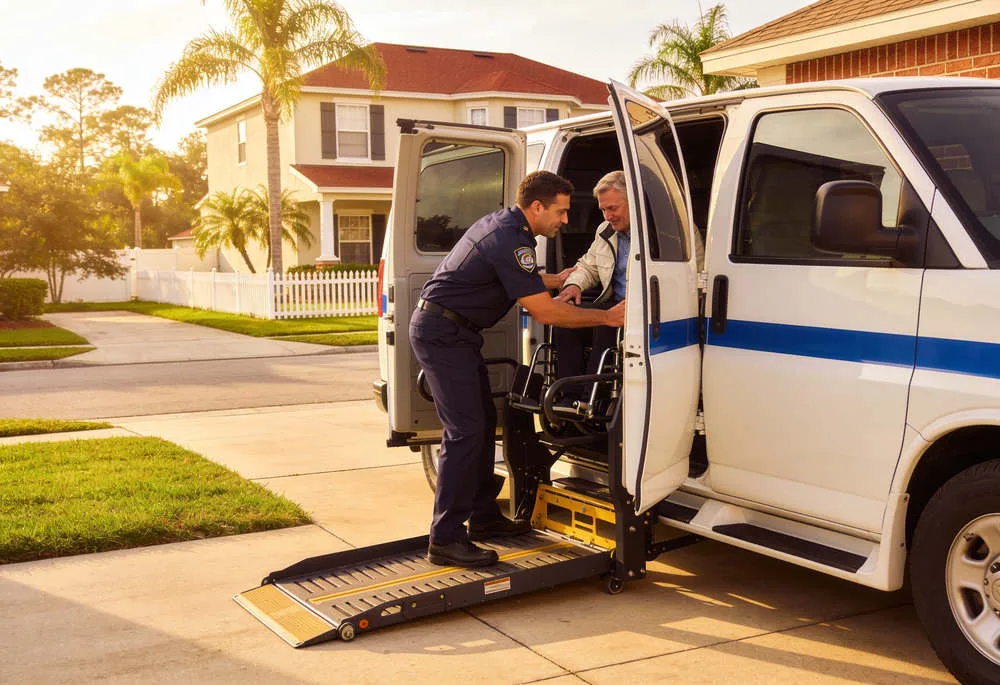
If you are comparing a wheelchair taxi vs medical transport and wondering what's the difference, the short answer is this: a wheelchair taxi provides transportation, while professional medical transport adds trained physical assistance, proper passenger securement, and support beyond the curb. For families in Mount Dora, that distinction can matter when a loved one cannot safely manage a standard ride alone.
Comfort Ride Transportation helps first-time bookers understand those differences without making the process more complicated than it needs to be. If you are arranging a ride for someone in Eustis and are unsure what level of help is appropriate, contact Comfort Ride Transportation at (321) 804-5233 to talk through the passenger's mobility needs and trip details.
A family in Tavares may only need a vehicle that can accommodate a wheelchair. Another passenger may need hands-on help from the door, careful loading with a lift, ADA securement during the ride, and assistance reaching the entrance at the destination. Those are very different transportation needs.
What does a wheelchair taxi provide?
A wheelchair taxi is designed to transport a passenger who uses a wheelchair. For someone who mainly needs an accessible ride from one location to another, that may be enough.
The important question is not simply whether the vehicle can fit a wheelchair. Families should ask what happens before the passenger enters the vehicle, how the wheelchair is secured during travel, and what help is available after arrival. A ride can be accessible without providing the level of physical assistance a medically vulnerable passenger needs.
For example, a wheelchair taxi in Mount Dora may be appropriate for a passenger who needs accessible transportation but does not require extensive assistance throughout the trip. The right choice depends on the person's mobility, cognitive condition, ability to transfer, and comfort level.
Professional medical transport adds physical assistance and securement
Professional medical transport is built around passengers who may need more help. Comfort Ride Transportation loads and secures wheelchair, stretcher, and ambulatory passengers under ADA guidelines. Drivers can also provide door-to-door assistance, which matters when the passenger cannot safely navigate the distance between a home, vehicle, clinic, or medical facility alone.
That extra help can be especially important after surgery, during ongoing treatment, or when age and illness have made balance and movement less predictable. Some passengers move slowly. Others may be anxious or confused. Rushing them creates more stress at exactly the wrong moment.
The vehicle is only part of the safety question
Families often focus first on the vehicle, and understandably so. A lift and proper ADA securement are important. But the driver's approach matters too.
Professional medical transport should account for how the passenger gets to the vehicle, how carefully they are loaded, whether they are properly secured, and what assistance they need at the destination. Comfort Ride Transportation also inspects vehicles daily for safety and cleanliness and keeps families informed during the trip.
This is where Handicapped Transportation can differ from booking an ordinary ride and hoping the driver can manage a passenger's specific mobility needs. The passenger is not an inconvenience to work around. The trip is planned around that person's safety and ability to move.
Questions to ask before booking transportation for a loved one
There are no silly questions when someone's safety is involved. First-time bookers often do not know which details matter, so it helps to describe the passenger's actual day rather than trying to choose a service based on a label.
Ask the provider questions such as:
- Does the passenger remain in a wheelchair during the ride, or can they transfer into a vehicle seat?
- Will someone help from the door to the vehicle and from the vehicle to the destination entrance?
- How are wheelchair passengers loaded and secured?
- Does the passenger have dementia, weakness, poor balance, or another condition that affects safe movement?
Be specific. If your father can walk ten steps with help but becomes unsteady after treatment, say that. If your mother uses a wheelchair and cannot follow complicated directions when anxious, mention it. Those details help the transportation provider understand what kind of assistance the ride requires.
Which option is right for your family?
A wheelchair taxi may work well for a passenger who needs an accessible vehicle and a straightforward ride. Professional medical transport is more appropriate when the person needs trained physical assistance, careful loading, ADA securement, door-to-door help, or closer attention throughout the trip.
Families across Leesburg, Clermont, and the wider Lake County region face this decision for medical appointments, treatments, discharges, and other essential trips. The safest choice depends on the individual passenger, not on what worked for someone else.
Talk through your loved one's transportation needs
If you are still unsure whether a wheelchair taxi or professional medical transport is the better fit, call (321) 804-5233 or reach out to Comfort Ride Transportation to discuss your loved one's mobility, assistance needs, and upcoming trip.