ADA Wheelchair Transport vs Standard Taxi Explained
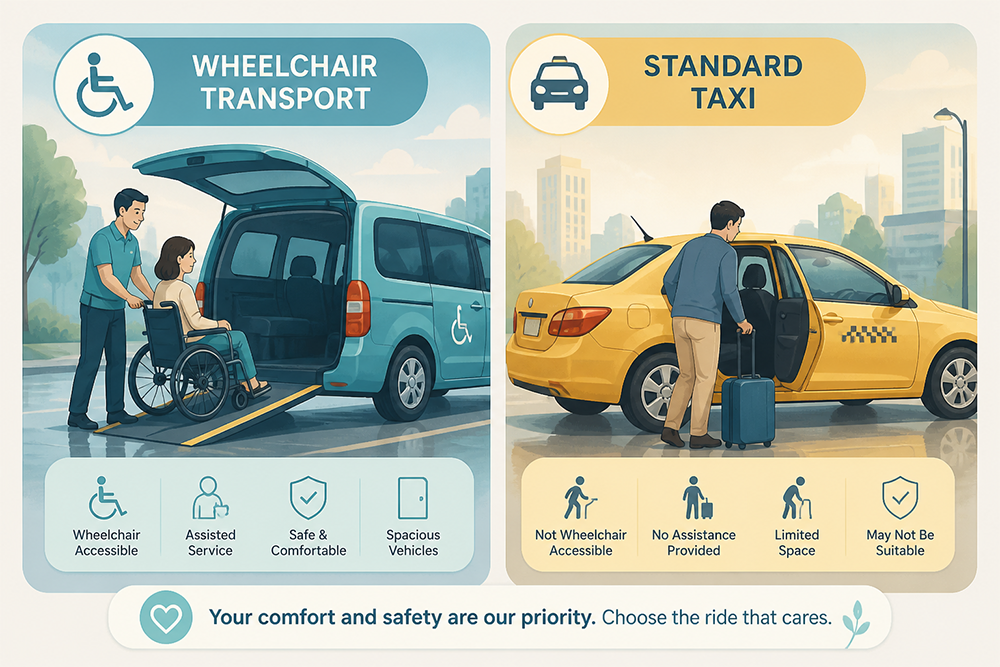
At first glance, transportation is just getting from one place to another. But for elderly passengers, wheelchair users, stretcher patients, and individuals recovering from surgery, the type of vehicle and the way they are assisted can completely change the safety of the trip.
In Central Florida, many families assume a standard taxi or rideshare can handle medical transport needs. In reality, the difference between ADA-compliant transport and a regular vehicle is not small. It is critical.
At Comfort Ride Transportation, we built our service around that difference. As the owner explains:
“Wheelchair, stretcher and ambulatory clients must be secured and loaded under ADA guidelines at all times. Taxi is standard seat belt requirements.”
That single distinction is the foundation of safe medical transportation.
What Standard Taxi or Rideshare Transport Actually Provides
A standard taxi or rideshare is designed for general public use. It is not built for medical safety, mobility support, or patient handling.
In most cases, these standard vehicles only provide:
A basic seatbelt for passengers
No specialized loading equipment
No wheelchair securement systems
No trained assistance for medical mobility needs
No stretcher transport capability
This setup may be fine for a healthy passenger going to the airport or a restaurant. But for someone with mobility challenges or medical conditions, it creates serious risk. There is no guarantee of proper handling during pickup or drop-off, no medical transport training involved, and no equipment designed to stabilize mobility devices. That is where the gap begins.
What ADA-Compliant Medical Transport Actually Means
ADA-compliant transportation is designed specifically for passengers who require mobility assistance. It is not just a vehicle type; it is a full system of safety, equipment, and trained procedures.
At Comfort Ride Transportation, ADA compliance means every step of the ride is structured for safety. This includes:
Wheelchair securement systems inside the vehicle
Hydraulic lifts for safe loading and unloading
Proper handling of stretchers when required
Trained assistance from home to vehicle to destination
Stabilization during travel to prevent movement or injury
This is not optional equipment. It is a required standard for every eligible passenger. As the owner clearly states: “Wheelchair, stretcher and ambulatory clients must be secured and loaded under ADA guidelines at all times.” This is the difference between basic transport and medical transport.
The Equipment Gap: Securement and Lifts
Why Securement Systems Are Critical for Patient Safety
One of the most important differences is how passengers are physically secured during transport. In a standard taxi, a passenger simply sits and buckles a seatbelt. There is no additional support if the passenger cannot sit independently or has mobility limitations.
In ADA-compliant transport, wheelchair passengers are secured using dedicated tie-down systems that hold the chair in place during the entire ride. This prevents shifting, tipping, or movement during braking or turns. This is especially important for:
Elderly passengers with balance issues
Post-surgical patients
Individuals with neurological conditions
Wheelchair-bound passengers
Stretcher-transported patients
Without proper securement, even a short ride can become unsafe.
Hydraulic Lifts vs. Manual Loading
Another major difference is how passengers enter and exit the vehicle. Standard taxis require passengers to physically step in or be assisted manually into a seat. This is not realistic or safe for wheelchair users or patients with limited mobility.
ADA-compliant medical transport uses hydraulic lifts that allow for safe elevation of wheelchairs into the vehicle, controlled lowering at destinations, reduced physical strain on patients and caregivers, and safer handling in wet or uneven conditions. This system removes the need for risky physical lifting and ensures smoother transitions. It also reduces the chance of injury during loading and unloading, which is one of the most vulnerable parts of any medical trip.
Door-to-Door Assistance That Goes Beyond Driving
Medical transport is not just about the ride itself. It is about the entire journey from inside the home to the medical facility. At Comfort Ride Transportation, we provide full door-to-door assistance for every eligible passenger.
As the owner explains:
“All our clients are VIPs and given every possible care and help from door to vehicle and vehicle to destination.”
This includes helping passengers safely exit their home, assisting with mobility devices, and ensuring they are properly settled before transport begins. Standard taxis do not provide this level of assistance. The driver typically remains at the vehicle while the passenger is expected to manage their own movement. That difference can be significant for elderly or medically fragile passengers.
Why Medical Training Matters in Transport
ADA-compliant transport is not only about equipment. It is also about training and awareness. Drivers and attendants in medical transport are trained to assist elderly passengers safely, handle wheelchairs and stretchers properly, recognize mobility limitations, provide calm and patient assistance, and avoid rushed or unsafe movements.
This is especially important for passengers with dementia, post-surgical recovery, or chronic conditions. The goal is not speed. The goal is safe, respectful care throughout the entire trip.
Why Families Cannot Rely on Standard Rideshare Services
Many families assume rideshare apps can be used for medical appointments. While this may work in some situations, it is not designed for patients who need mobility support.
The risks of using standard rideshares include:
No guaranteed wheelchair access
No securement for mobility devices
No trained assistance for transfers
No medical transport priority scheduling
No consistent vehicle standards
This creates uncertainty for families who are trying to coordinate important medical care in Central Florida. For patients traveling to hospitals such as AdventHealth Orlando, Orlando Health, or VA clinics, reliability and safety cannot be optional.
Reliability, Cleanliness, and Open Communication
ADA Transport and Chronic Care Reliability
For patients who require recurring treatments like dialysis or physical therapy, consistency is essential. Standard transport services may vary from ride to ride. Vehicle type, driver experience, and assistance level can all change. In ADA-compliant medical transport, consistency is part of the system.
At Comfort Ride Transportation, scheduling is structured to ensure patients receive the same level of care every time. This reliability helps prevent missed appointments and reduces stress for both patients and caregivers. As the owner states: “Our time cushion in place has made it so we have never been late for their important transports.” That consistency is especially important for patients who cannot afford disruptions in care.
Safety and Cleanliness as Daily Standards
Medical transport also requires a higher level of cleanliness and vehicle readiness than standard taxi service. At Comfort Ride Transportation, vehicles are inspected daily to ensure safety and hygiene standards are met.
As the owner explains:
“Our vehicles are inspected daily for safety and cleanliness.”
This ensures that every passenger is transported in a safe and properly maintained environment, which is especially important for immunocompromised or post-surgical patients.
Communication That Supports Families During Transport
Families are often not physically present during transport. That is why communication becomes part of the service itself. We maintain direct contact with caregivers throughout the trip.
As stated by the owner:
“We are in contact with them by cell phone 24/7.”
This gives families peace of mind knowing their loved one is safe, en route, and arriving at their destination as expected. Standard taxis do not provide this level of communication or accountability.
Treating Patients With Respect and Dignity
At the core of ADA-compliant transport is respect for the passenger. Every individual deserves to be treated with care, patience, and dignity, regardless of mobility level or medical condition.
As the owner says:
“We are known for treatment of our clients and treat them like family.”
This mindset influences every interaction, from pickup to drop-off. It ensures that passengers feel safe, respected, and supported throughout their journey.
Conclusion: The Difference Is Safety, Not Just Transportation
The difference between ADA-compliant wheelchair transport and a standard taxi is not minor. It is fundamental. One is designed for convenience. The other is designed for safety, medical needs, and human dignity.
At Comfort Ride Transportation, we built our service around that responsibility. From securement systems to trained assistance, every detail is focused on protecting the passenger. In Central Florida, where medical appointments are often critical and timing matters, choosing the right type of transportation is essential.
If you need safe, reliable non-emergency medical transportation in Central Florida, Comfort Ride Transportation is ready to help. Schedule your ride today and experience professional ADA-compliant transport designed for safety, comfort, and peace of mind.