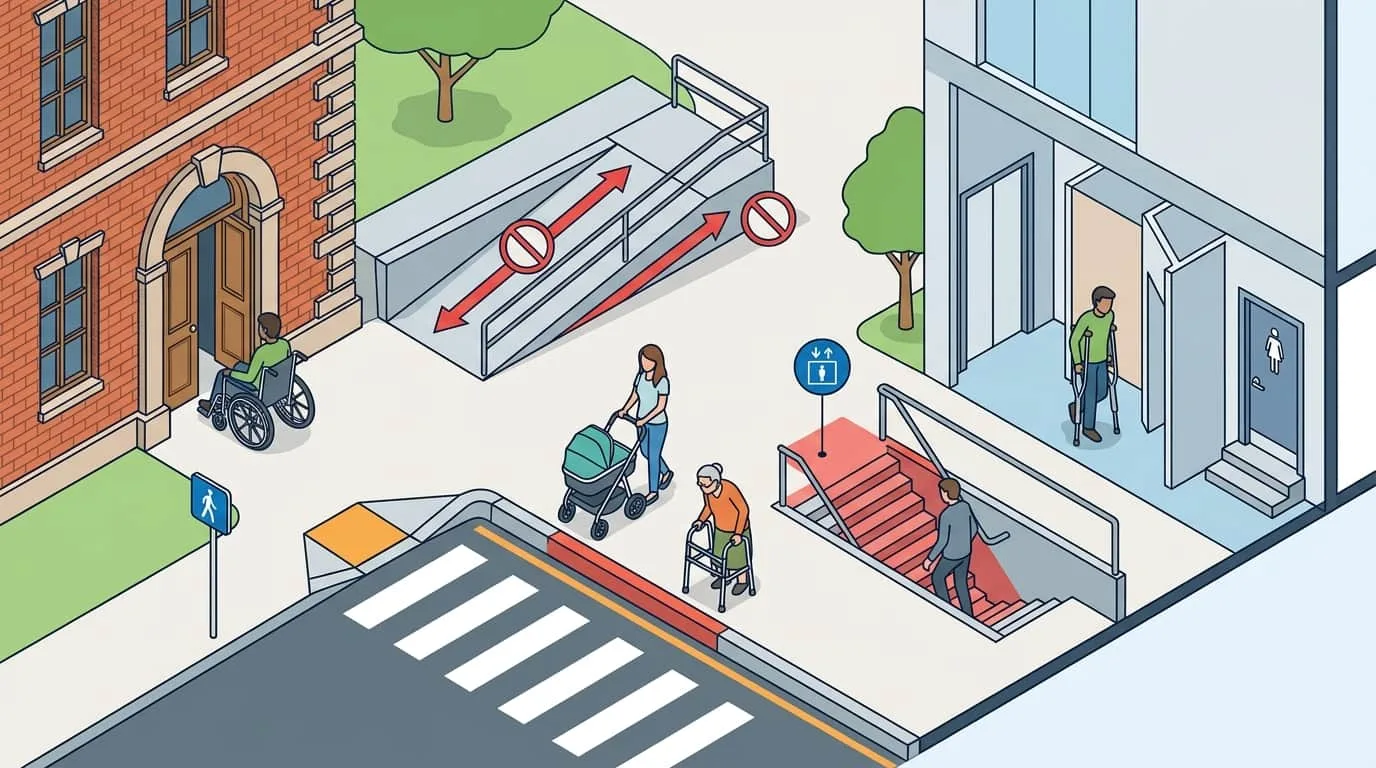
The most difficult everyday places for wheelchair users to access include restaurants with steps, older retail stores with narrow aisles, and public transit without functional ramps. Older infrastructure often lacks basic accommodations, forcing chronic care patients to plan extensively just to run basic errands or attend appointments.
Navigating Central Florida in a wheelchair takes serious planning. If you live in Orlando, you already know that a simple trip to the store typically turns into an obstacle course of heavy doors and steep curbs. If you need a dependable ride to your appointments, contact Comfort Ride Transportation at (321) 804-5233. We help chronic care patients reach their destinations without the stress of inaccessible routes.
Our team understands the daily hurdles you face. When people ask what everyday places are difficult for wheelchair users to access reasons usually point straight to older buildings and poorly planned public spaces. Let us look at the specific barriers that make getting around so tough.
Why Are Restaurants and Cafes So Difficult to Access?
Restaurants often present immediate barriers through entrance steps, tight seating arrangements, and inaccessible restrooms. In historic areas like downtown Orlando, nearly 40% of small cafes lack push-button doors or flat entryways. This forces wheelchair users to rely on strangers just to get inside the building and order a meal.
Once inside, the challenges continue. Tables are frequently placed too close together. A standard wheelchair requires at least 36 inches of clearance to move comfortably between tables. Outdoor seating areas often feature uneven cobblestones or tables with center pedestals that block wheelchair footrests.
How Do Retail Stores Affect The Shopping Experience?
Retail stores create access barriers through narrow, cluttered aisles and checkout counters that sit too high. Clothing stores frequently use their accessible dressing rooms for extra inventory storage. This makes trying on clothes practically impossible for someone using a mobility device.
If you wonder what everyday places are difficult for wheelchair users to access reasons almost always include retail environments. Store managers often place temporary display racks right in the middle of the main walkways. This forces you to take long detours or ask staff to move heavy fixtures just so you can browse the merchandise.
What Makes Public Transportation a Journey Itself?
Public transit is notoriously unreliable for wheelchair users due to broken bus lifts and out-of-service elevators at train stations. When a bus arrives with a malfunctioning ramp, passengers must wait 30 to 60 minutes for the next one. This unpredictability makes getting to time-sensitive doctor visits extremely stressful.
For chronic care patients, missing an appointment simply is not an option. That is why specialized Medical Transportation services are so vital. You need a dedicated vehicle that you know will show up on time with fully operational ADA-compliant equipment.
Micro-Case Study: Navigating Older Orlando Infrastructure
Consider the charming brick streets and historic buildings of Winter Park. In our years serving Central Florida, we have learned that older infrastructure presents the toughest barriers for chronic care patients. We recently helped a client who needed to visit a specialist located in a 1920s building. The clinic had a steep 4-inch lip at the front door and an elevator too small for a modern power chair.
Without a reliable transport service bridging this gap, this patient would miss vital care. Our driver safely navigated the uneven brick sidewalks and manually assisted the patient through the building's awkward rear entrance. Booking a dependable wheelchair taxi in Mount Dora or Winter Park prevents these logistical nightmares. It allows you to maintain your independence regardless of the city's aging architecture.
Are Entertainment Venues Fun for Everyone?
Entertainment venues often restrict wheelchair users to isolated companion seating areas at the very back of the theater. Stadiums might have ramps, but the designated viewing areas frequently get blocked when other attendees stand up during the show. This leaves you feeling excluded from the actual experience.
Museums and galleries pose their own set of problems. Interactive exhibits are sometimes placed on high pedestals. When analyzing what everyday places are difficult for wheelchair users to access reasons frequently center on this lack of universal design in public spaces.
How Hard Is It to Access Healthcare Facilities?
You might expect medical offices to be fully accessible, but many still lack proper ramps and accessible examination rooms. Patients often encounter examination tables that do not lower to a safe height. This makes transferring from a wheelchair to the table dangerous or impossible without mechanical lifts.
Basic access to care should never be a physical struggle. Choose Comfort Ride Transportation to ensure you arrive safely at facilities that can actually accommodate your needs. Our CPR-certified drivers will even help you reach the reception desk to ensure the building is safe to navigate.
Do Educational Institutions Provide Learning for All?
Schools and universities pose major challenges due to spread-out campuses with older dormitories and inaccessible library stacks. While newer buildings follow ADA guidelines, many historic campus structures require students to use freight elevators. Sometimes students have to enter through loading docks just to attend class.
Playgrounds and parks also lack accessible equipment. Wood mulch and deep sand make pushing a manual wheelchair exhausting. Concrete pathways are necessary for true inclusion.
What Are the Best Solutions for Overcoming Accessibility Obstacles?
Universal design principles and ADA legislation slowly improve our infrastructure over time. Businesses can install basic concrete ramps for $1,500 to $3,000 to fix entrance step barriers. Smartphone apps now let users rate the accessibility of local businesses, helping you plan your day better.
Until the infrastructure catches up, professional Handicapped Transportation offers a secure bridge to the outside world. Having a dedicated driver who understands how to safely secure your chair removes the anxiety of running basic errands.
The Bottom Line on Building a More Accessible Future
Creating an inclusive society requires local businesses to step up and remove physical barriers. Understanding what everyday places are difficult for wheelchair users to access reasons helps us advocate for better infrastructure in our communities. You deserve to navigate your city with dignity and ease.
If you are tired of struggling with unreliable public transit or inaccessible city streets, we can help. Please contact Comfort Ride Transportation at (321) 804-5233. Let our experienced Central Florida drivers give you the safe, stress-free ride you deserve.